What a Truck Unloader Conveyor Does—and Why It Matters for High-Velocity Operations
A truck unloader conveyor is the frontline machine that turns inbound trailers into productive inventory, faster and safer than manual methods. Positioned at the trailer door or extended deep into the container, it conveys cartons, parcels, sacks, or totes directly into the facility’s material flow. In an era where lead times are measured in hours and not days, this single interface between transport and warehouse can determine the pace of the entire shift.
Modern designs include telescopic belt conveyors that extend 10–18 meters into 40-foot containers, flexible powered roller conveyors that snake between tight dock positions, and mobile “dockless” units for yards or facilities without fixed docks. A robust truck unloader conveyor typically offers variable speed control, bidirectional movement for loading or unloading, adjustable elevation for different trailer heights, and safety features such as emergency stops, anti-collision sensors, and soft-start drives that protect both people and product.
Operationally, these conveyors eliminate the walk-time and lifts that slow down crews. Instead of passing boxes from person to person, operatives focus on scanning and exception handling while the conveyor does the heavy transport. The result is higher cartons-per-hour, fewer bottlenecks at the dock, and improved ergonomics. In parcel hubs, express delivery terminals, and cross-border logistics gateways, this speed translates to more trailers turned per day and fewer dwell-time penalties.
Technology integration raises the bar further. Photo-eye accumulation can meter flow to downstream sortation. Handheld or fixed-mount scanners tie into a WMS/WCS to confirm receipt, while scales and dimensioners capture compliance data on the fly. Smart HMIs record utilization and alarms for predictive maintenance. Energy-efficient motors and sleep-mode logic curb power draw during lulls, and LED lighting on the boom improves visibility deep inside trailers without extra fixtures.
Choosing the right format depends on the product mix—loose-loaded parcels require different handling than bagged commodities or totes. But across use cases, the promise is consistent: faster turnarounds, safer teams, and a smoother handoff into automated logistics. To explore specifications and configurations suitable for your flow, see truck unloader conveyor.
Key Features, Specifications, and How to Select the Right System
Selection starts with throughput. Quantify peak cartons-per-hour, variance across shifts, and trailer profiles. A facility handling high-mix e-commerce parcels might need VFD-driven belts that smoothly ramp from 20 to 40 meters per minute and support 2,000–3,000 CPH during spikes. In contrast, industrial inbound parts may require heavier-duty frames, wider belts, and impact-protection zones for irregular loads. Matching speed to workload prevents jams upstream and starvations downstream.
Belt width and build matter. Typical widths range from 600 to 1,000 mm. Wider belts enhance stability for bulky cartons, while narrower belts keep footprint compact where dock space is tight. Choose belt materials with anti-static and flame-retardant properties to meet safety standards. For dusty or humid environments, sealed bearings and corrosion-resistant finishes extend life. If handling bags or raw materials, consider cleated belts or a trough design to prevent rollback on inclines.
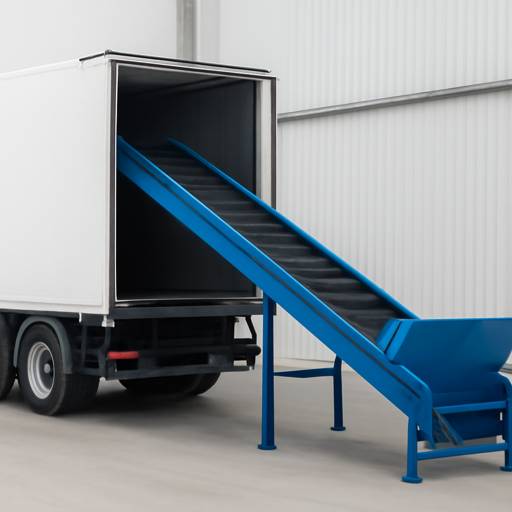
Adjustability is a hallmark of a great truck unloader conveyor. Telescopic segments reduce the gap between belt nose and cartons, minimizing reaches. Height-adjust features accommodate different trailer decks and help maintain ergonomic hand-off zones at downstream workstations. If the operation serves mix fleets—box trucks, 20/40-foot containers, and 53-foot trailers—look for long-reach booms, powered elevation, and options like side guides or articulating outriggers that stabilize the unit on uneven surfaces.
Safety is non-negotiable. Prioritize redundant E-stops along the boom, anti-pinch guarding, audible/visual alerts, and obstruction-detection sensors. Interlocks can prevent movement when personnel are in the hazard zone. Clear line markings, integrated task lighting, and grippy walking surfaces inside the trailer reduce slips and missteps. For management, event logs help diagnose alarms and document compliance training.
Integration and total cost of ownership round out the decision. A PLC that communicates with WMS/WCS allows auto-start on call signals and flow-balancing with sorters. Remote diagnostics and modular assemblies simplify upkeep and cut MTTR. Energy features—efficient gearmotors, sleep modes, and smooth acceleration—reduce draw and cut wear on mechanicals. Look at the lifetime value: spare parts availability, regional service support, and changeover flexibility as product lines evolve. Taken together, these choices determine not just purchase price but payback, which many operations see in months through reduced labor per trailer, fewer injuries, and faster dock turns.
Deployment Scenarios, Layout Designs, and Field-Proven Wins
Every dock is unique, but the right layout turns variability into flow. In high-volume parcel hubs, dual-lane telescopic units serve side-by-side doors, each feeding flexible powered rollers that distribute to manifesting stations. This arrangement evens out surges from live unloads and holds a buffer while exceptions are resolved. In 3PL cross-docks handling retail promotions, mobile conveyors roll between doors to chase priority freight, with quick-connect power and scan points that maintain data integrity as the layout shifts.
Facilities without fixed docks can still unlock speed with mobile, dockless truck unloading solutions. A yard ramp brings the trailer floor level to the warehouse threshold, and a mobile belt conveyor bridges the final meters to put-away zones. For manufacturers receiving inbound parts, a robust incline unit can discharge directly to lineside tuggers or gravity lanes, compressing move time from trailer to assembly. Food and beverage warehouses often add stainless or coated components to meet hygiene demands while leveraging the same core mechanics for bulk bags and cartons.
Real-world improvements are tangible. A regional e-commerce site processing flash-sale peaks cut unload time per 40-foot container from roughly 90 minutes to under 45 by adopting a powered telescopic boom with variable speed and work lighting. That single change freed dock doors faster, increased trailers received per shift, and reduced overtime during promotions. In a cross-border consolidation center serving South China, adjustable-height conveyors absorbed erratic parcel sizes and reduced manual lifts, decreasing strain-related incidents and stabilizing performance across back-to-back waves.
Data capture and automation amplify these gains. Adding dimensioning and weighing at the discharge ensures immediate data availability for billing and routing. Coupled with barcode or RFID capture, cartons enter inventory with higher accuracy and fewer touchpoints. Flow sensors and WCS rules modulate conveyor speed when downstream is saturated, preventing pileups that cause stop-start inefficiencies. When a zone clears, soft-start logic returns the system to optimal speed without jolting packages or stressing belts.
Operational discipline cements long-term ROI. Standardized unloading playbooks, visual dock assignments, and ergonomic training reduce variability by shift and season. Quick checks—belt tension, roller health, sensor alignment—head off downtime. Spare kits on-site and remote support keep utilization high. As SKUs and cartons evolve, modular sections add or reconfigure to maintain target CPH without major rebuilds. Whether in express parcel networks, warehousing campuses, or industrial loading bays, a well-specified truck unloader conveyor becomes the steady heartbeat of inbound logistics, turning the unpredictable cadence of trailers into a reliable, scalable flow.

Hailing from Valparaíso, Chile and currently living in Vancouver, Teo is a former marine-biologist-turned-freelance storyteller. He’s penned think-pieces on deep-sea drones, quick-fire guides to UX design, and poetic musings on street food culture. When not at the keyboard, he’s scuba-diving or perfecting his sourdough. Teo believes every topic has a hidden tide waiting to be charted.